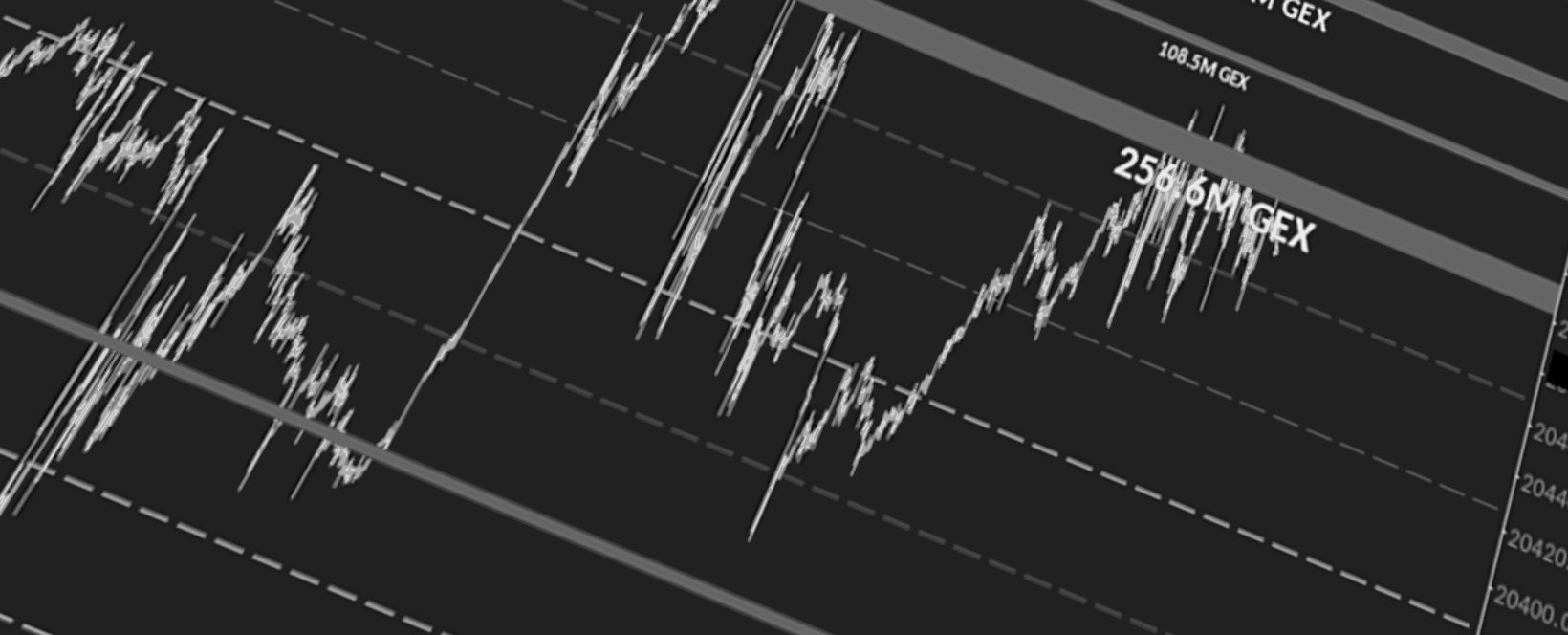
GEX Levels Explained
What are GEX Levels. How can they benefit your trading??

What are GEX Levels. How can they benefit your trading??
GEX (Gamma Exposure) levels are a key concept in options trading, especially when analyzing market behaviors of heavily traded ETFs like QQQ (tracking the Nasdaq-100) and SPY (tracking the S&P 500).
They reflect the positions and potential hedging behaviors of options market makers and dealers, who are entities that provide liquidity in the options market by buying and selling options. Understanding GEX can provide insights into how the underlying price of these ETFs may behave due to the hedging actions of these dealers.
GEX gives clues about how options market makers may impact the underlying market through their hedging activities:
Dealers and market makers are often required to stay delta-neutral to minimize the risk from directional moves in the market. Because options have a gamma, which influences how their delta changes with price movements, dealers must continuously adjust their hedges as prices change to maintain neutrality
+ GEX (Positive Gamma Exposure)
Market makers need to hedge by trading against the direction of the underlying asset's price movement.
For example, if prices rise, they sell shares, and if prices fall, they buy shares.
(-) GEX (Negative Gamma Exposure)
Market makers hedge by trading in the same direction as the underlying asset's price movement.
If the underlying rises, they buy shares, and if it falls, they sell shares.
High positive GEX typically indicates lower volatility, where market movements are dampened by dealer hedging. Traders might expect mean-reverting price action during these times, where prices tend to oscillate around certain levels without trending strongly.
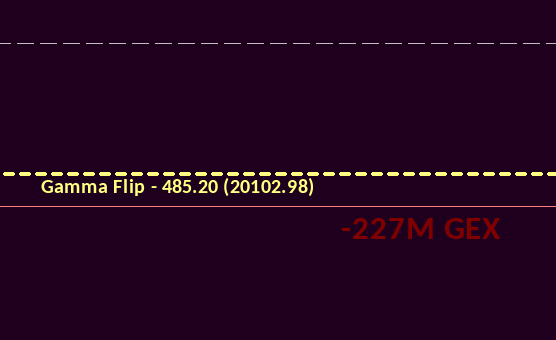
Negative GEX indicates a period where price moves could be more pronounced, as dealer hedging amplifies the price trends. Traders may expect breakout moves or more extended trends during such periods, making it a time to either capitalize on these moves or manage risk more carefully
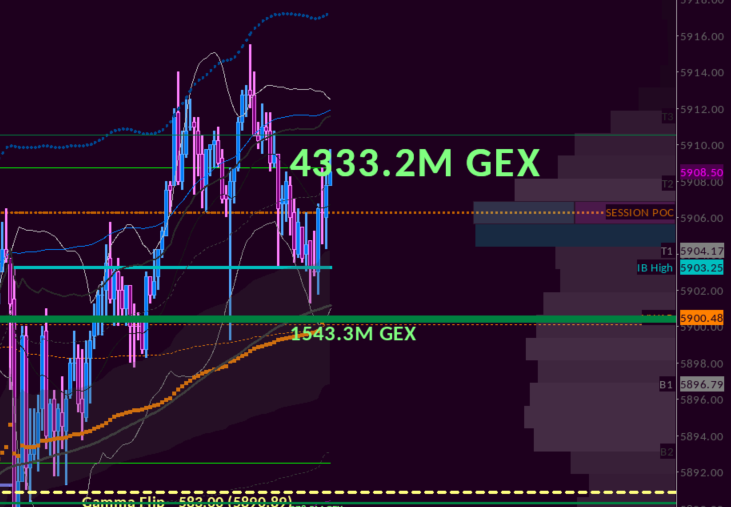
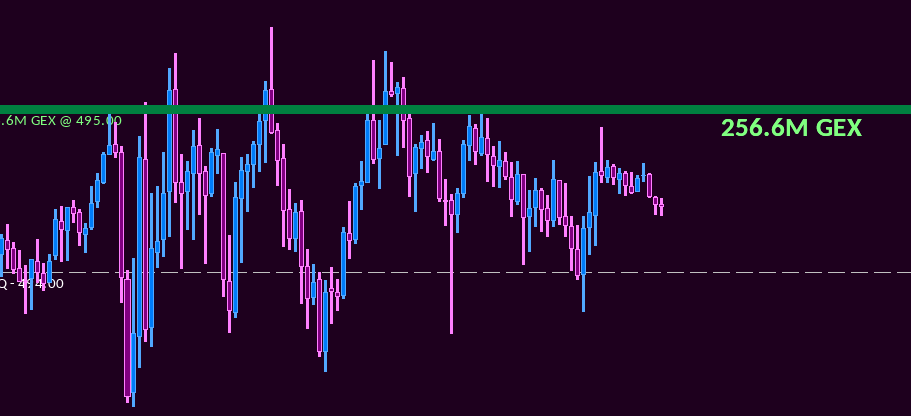
GEX levels often correspond to strikes with significant options open interest. These can act as important support or resistance levels for the underlying ETF price. For instance, a large positive GEX level around a certain strike might create a stabilizing effect at that price, making it harder for the market to break through that level.
Around options expiries (like at the end of the week or month), shifts in GEX can become more pronounced as options roll off and dealers adjust their hedging. This can lead to changes in market behavior, providing trading opportunities for those who track these shifts
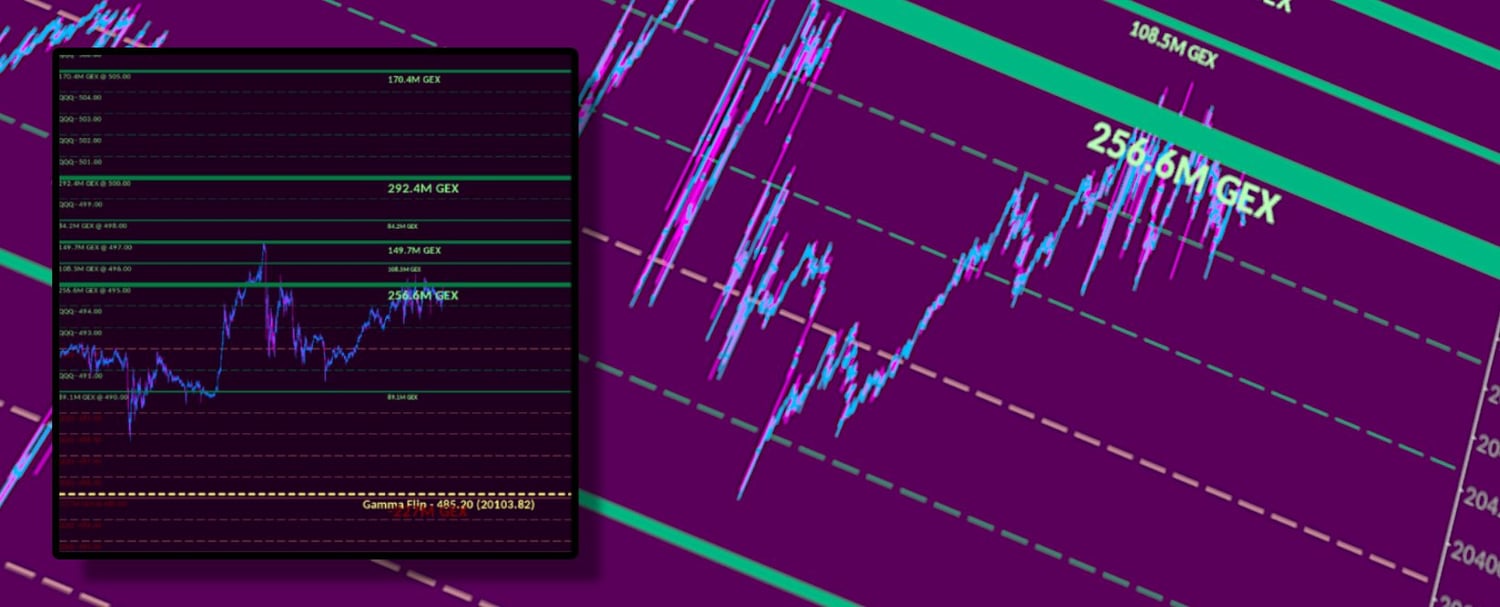
In summary, GEX levels for ETFs like QQQ and SPY are valuable for understanding how market makers and dealers might hedge their positions in NQ and ES respectively.
Understanding these dynamics helps traders position themselves for shifts in market behavior that can be influenced by dealer hedging activity.
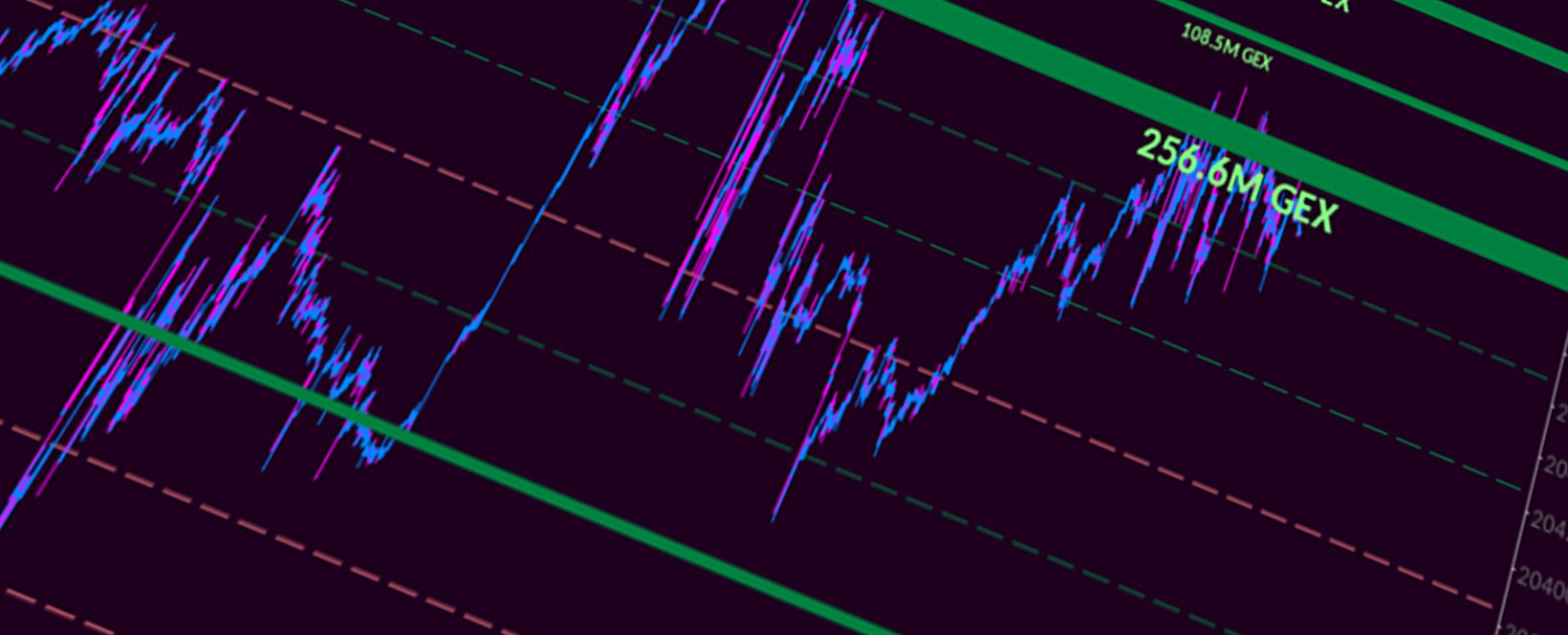
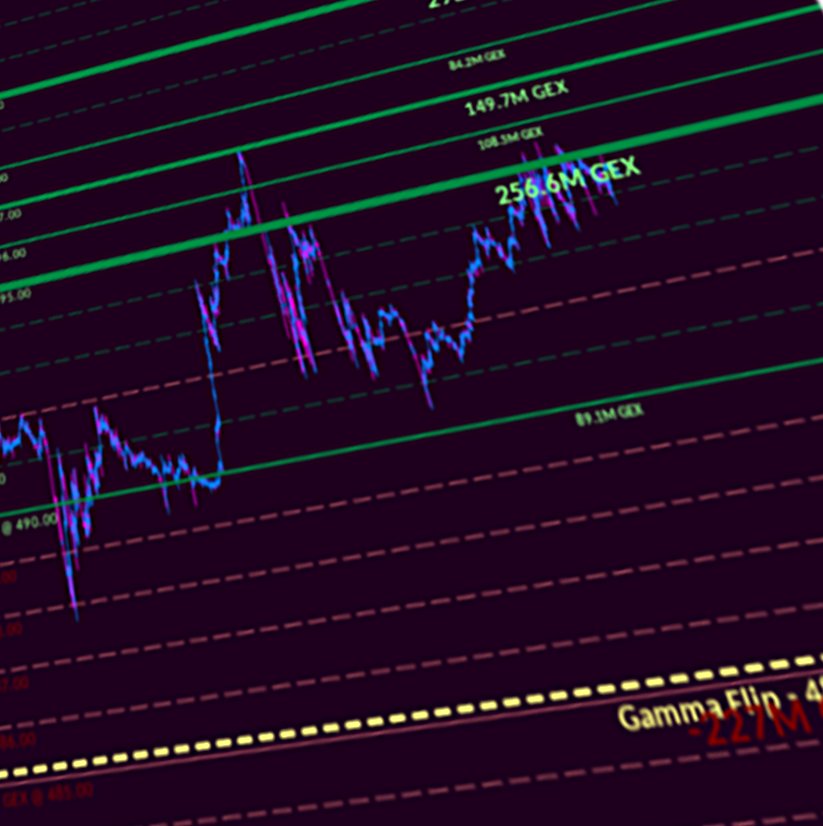
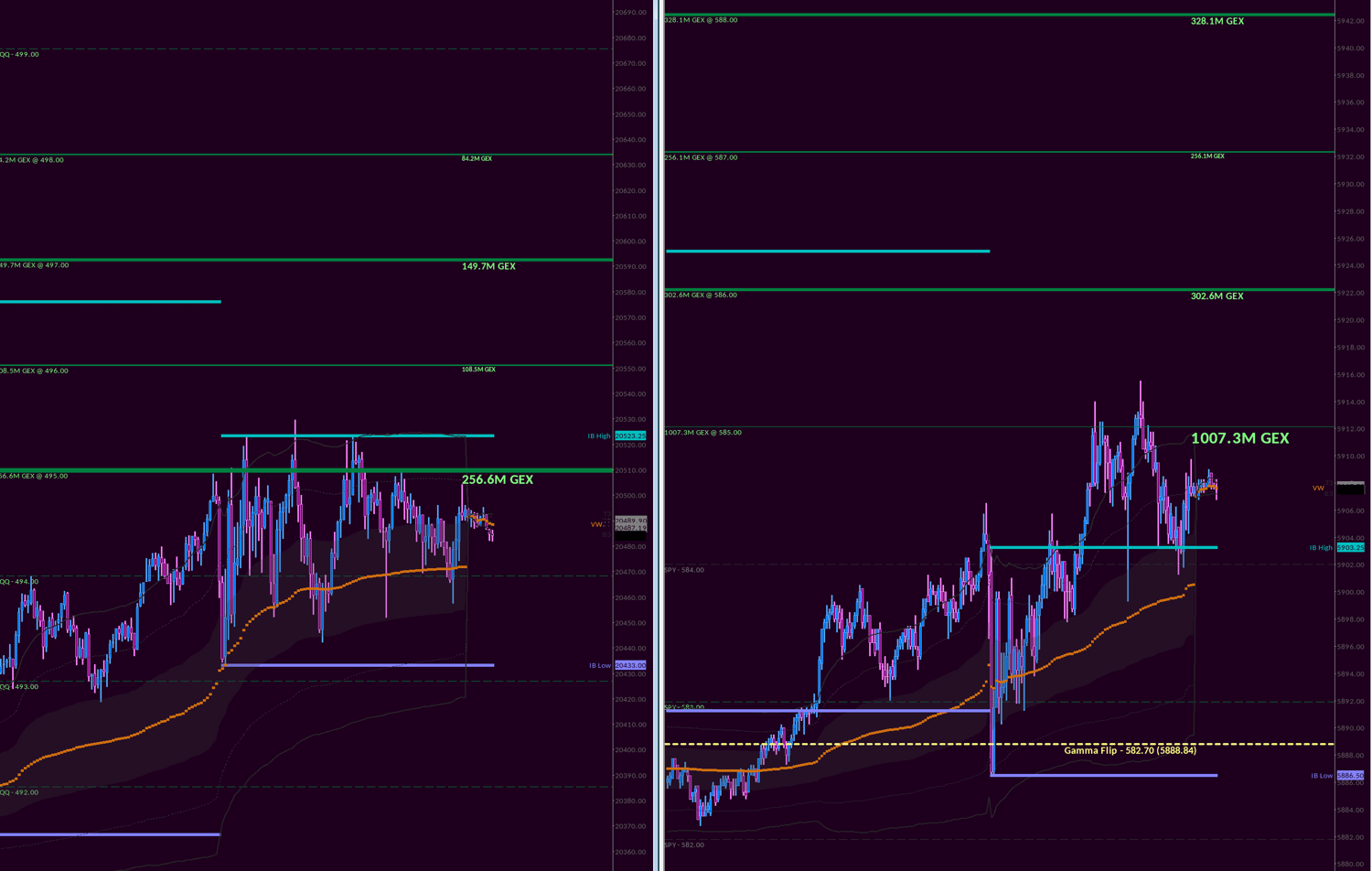
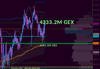
This study displays the current GEX levels for either the QQQ or the SPY ontop of your chart in Sierra Chart.
The basic version, if you don't pay monthly, just displays the Option strike price levels, with the GEX levels delayed by 15 minutes from the CBOE.
The monthly paid version of this study (coming soon), will provide LIVE GEX levels, and historical replay ability, so you can backtest using the levels. Sign up for updates, to know when that is going to be released!